Labels, Stereotypes & Social Constructs Pt. 1
As a writer, I have a great deal of respect for words and how they are used to communicate ideas, tell a story, and verbalize the human experience. As a believer, it is even deeper than that; words are the basis for the existence of visible reality itself.
The earth was without form, and void; and darkness [a]was on the face of the deep. And the Spirit of God was hovering over the face of the waters.
Then God said, “Let there be light”; and there was light. ( GENESIS 1:2–3)
This is why I try to have a measured approach to how I use words; that is unless I am mischievously engaging in sarcasm. And furthermore why I am appalled at how words have recklessly been weaponized as cultural and political tactics with seemly no regards of the ramifications, even if it leads to the literal death of another.
Words like racist, fascist, woke, hate, love, truth, are applied so casually at a whim not in service to convey something meaningful, dynamic and weighty but instead just a way to hypocritically control and shame your opponent on a high- stakes cultural chest board. Such words have been hollowed out, the over usage of them along with twisted interpretations have cause some to become desensitized or feeling justified in a ranging degree of despicable acts. Their are no winners here; just moves, one side getting their agenda pushed further while the other gets labeled, dehumanize, and targeted.
The Evolution of Word Play
That’s Woke!
Historically, the word or at least the concept of Woke originated in the 1920s by Pan African activist and Black Nationalist Marcus Garvey. Mr Garvey founded the Universal Negro Improvement Association (UNIA) in 1914 and coined the phrase “Wake up Ethiopia! Wake up Africa!”.
The significance of “ staying Woke” for the Black community was a cultural cue for vigilance during a time of unparallel social injustice and violent racial dangers perpetrated by White Supremist particularly in the Jim Crow South. Being Woke was a matter of life or death; a call of survival.
What it means to be Woke has since been hijacked and misappropriated for political peacocking. Some reducing it to a catch-all phrase, a demeaning label for far- left indoctrination being institutionalized in American culture. While the other side weaponized it in the name of a virtuous cause.
During the #MeToo Movement, being Woke reemerged into the mainstream spotlight, bringing awareness to unchecked widespread sexual assault and harassment cases in the workplace. It was a global reckoning for powerful perpetrators like Harvey Weinstein; giving a voice to many survivors. There was just one problem, some in the movement became overly zealous; drunk with power.
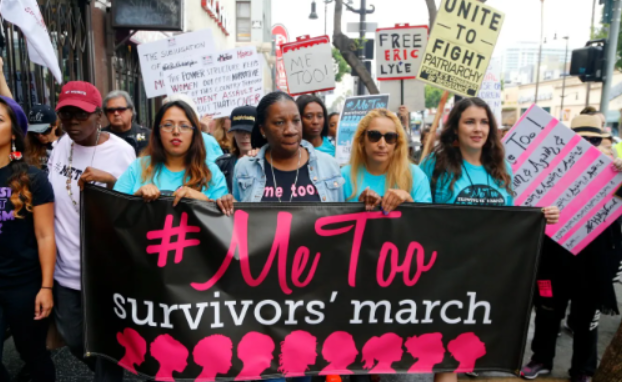
Instead of staying focused on those proven guilty of despicable crimes, allegations with no due process were grounds to ruin a man’s professional and personal reputation. This weaponization of Woke gave birth to Cancel Culture.
Such generalized man- bashing didn't just lead to an explosion of online discourse, there were real- world ramifications. According to Leanin.org and SurveyMonkey, during the #MeToo movement, 60% of male managers avoided one-on-one interactions with women out of fear of being targeted with false accusations. Research later conducted by other academic collaborations both in Canada and the States concluded that this backlash ultimately cost women getting hired for new opposite-gender opportunities; particularly if the woman was considered attractive; #MeToo did wonders for progress indeed.
As someone conservative, yet moderate, I never saw the rise of “anti-woke” sentiment as a rejection of the word’s original, well-meaning roots. It felt more like backlash against what the term had mutated into.
“Woke” stopped meaning socially aware and started meaning corporate PowerPoint sermons, Hollywood checkbox casting, and storylines that felt less like art and more like HR compliance training.
This cultural overreach had the subtlety of a fire alarm.
Hollywood, sports, academia, corporate America, all seemed to be speed-running a rebrand of society, often confusing symbolism for substance.
So when the anti-woke pushback arrived, I understood it, and revelled in it as a cultural recalibration. A swing back toward a moderate balance. and for a moment, it seemed like that’s what it was.
But then the pendulum did what pendulums do, it kept swinging
What began as a welcomed critique hardened into its own ideology. I’ve come to think of it as Hyper Anti-Wokeness: the mirror image of what it opposed. Some of the same excess, just inverted.
Regrettably, like the #MeToo zealots, some hyper anti woke warriors do not merely want moderation — they want vindication. We live in a world where everything is polarized and hyper analyzed, truly a grifter’s paradise.
It’s exhausting.
As the culture moderates, especially in Hollywood, it feels fairly balanced, however, my annoyance of the hyper Anti woke sectors online cannot be repressed.
Seriously, I am reminded of the cautionary tale of Harvey Dent from The Dark Knight.
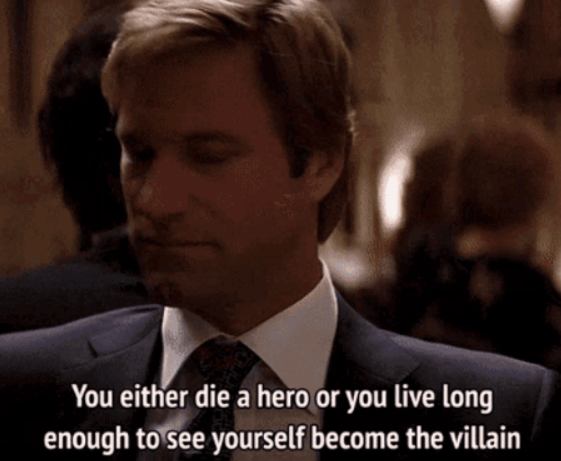
Is restoring cultural equilibrium really that hard? It’s like two teams pulling each other into the mud and calling it progress.
Next up in Part 2, One of the most weaponized label of al